Thursday, 24 August 2017

Anglesey beachcleaning and our new GBBC coordinator

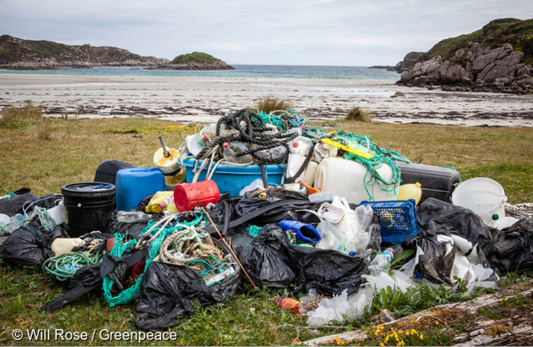
This year the Great British Beach Clean (GBBC) is coordinated by our Beach and River Clean Project Officer, Lizzie Prior. Lizzie shares her beach-cleaning experience, provides her insight into the timing of GBBC and the importance of the litter data collected at Anglesey.  


My first beach clean was probably a little more unusual than most. For one I was in the Philippines but two, I was actually leading it! Trying to write a poster in a different language  was a little challenging, but I would never forget the enthusiasm I received from the local community.  They were shocked to hear that it's an estimated, 75 years for a crisp wrapper, 500 years for a nappy and 450-1000 years for a plastic bottle to break down.

The inland litter can still make it to our coastline, by entering either a stream, river or canal. It all leads to the ocean and washing up on our beaches. Litter can be incredibly harmful to our marine wildlife, from entanglement to ingestion. Once plastic is in their stomach it will never break down and the animal starves as food cannot be consumed easily.

We wanted to do something about this issue. First, to remove the direct threat litter poses to marine wildlife by removing it from our beaches, but to also understand the extent of the issue and what types of litter we were finding. This was the birth of Beachwatch!


It started in 1994, but with just a small team we knew we needed passionate members of the public to help record what litter items are being found around our coastline. Over that time volunteers from around the UK have gone to their local beach and surveyed every man-made item they found. The extensive data that has collected over the years has allowed us to safeguard our marine environment from litter. We campaigned for the 5p bag levy when our data showed more and more plastic bags being found on our beaches. Since this was introduced in Wales we have seen a 22% drop of plastic bags on our beaches and from 2015-2016 we saw a 40% drop in plastic bags across the UK! 

This is fantastic news and just goes to show that with everyone making small changes in their day-to-day, can have a real positive influence on our marine environment. Beachwatch is all about a long term solution that we are striving for, to prevent litter from reaching the environment in the first place.

These beachwatch litter surveys take place throughout the year, but we also have a huge beach cleaning weekend every 3rd weekend of September. We call this the Great British Beach Clean.
This year it runs from Friday 15th - Monday 18th September and will see almost 400 beach cleans take place across the UK with valuable litter data being collected. We chose this weekend because it falls on an even bigger event, the International Coastal Clean-up (ICC). This was set up by the American Charity, Ocean Conservancy. Over this weekend over 100 countries take part in a beach clean and litter survey and submit their findings to Ocean Conservancy who analyse all the results and write a report on what was found. Our Great British Beach Clean is the UK's entry into this global trash tally.  Find last years report at: http://bit.ly/2rKZFa8 .

© John Archer-Thomson

In 2016, from GBBC we found that there was, on average, 649 items of litter found per 100m of beach surveyed across the entire UK. Wales was just below this at 607 litter items per 100m. We have Beachwatch organisers in Angelsey, one area in particular is collecting data that not only feeds into our National database, but also into in to a European one. This data is used for our Government to monitor litter levels throughout the UK. Under the EU Marine Strategy Framework Directive, all EU states must monitor their littler levels and our Beachwatch programme helps provide the information the UK needs.

We have a few cleans that take place over the Great British Beach Clean weekend in Angelsey, but we would love more to really get a picture of litter levels in this area. It's a great event to be a part of where you can head down to your local beach, meet like minded people whilst also contributing to a Nationwide data collection programme that has real benefits to protecting our marine environment. If you wish to become an organiser or take part in a event please check out our website at: www.mcsuk.org/beachwatch/greatbritishbeachclean

We hope to see you on the beach soon! 

Thursday, 3 August 2017

Plastic - In Our Seas and In Our Bodies: Sea Dragon 4 days to go Heading down to Plymouth ...

Sea Dragon

4 days to go
Heading down to Plymouth on Sunday
We go aboard at 10am on Monday and sail and 5pm
Remember to sign up to receive my blog in your email.
I will post whenever we have WiFi, describing our adventures and what we are finding.

I visited the head office of the UK Marine Conservation Society last week.  They will be posting my blogs on their FB and Twitter feeds and when we get back I will be writing an article for the Spring edition of their magazine.  

Tomorrow I am visiting a local plastic card manufacture; I have approached all the local plastic manufacturers and I'm delighted that this one has invited me to come and talk about the trip.

I did a talk/workshop while I was away which was well met, and people discussed what they could do both in their personal lives to reduce their plastic use, and litter picking in their local environment to prevent more plastic being washed down storm drains into the sea. 

I've started my final assignment for the Netherlands Open University Micro plastic course, wish me luck, needs finishing by Saturday.

BTW I have so far raised about 2.5K towards my fare, thank you again to everyone who has supported me through my crowdfunding page (which is still open and able to receive, link below), given me personal donations, and/or bought my plastic crafts and art cards.

www.gofundme.com/plasticseas

This post has been contributed by Deborah Maw - read her full expedition blog at http://exxpeditionuk2017.blogspot.co.uk/2017/

Thursday, 6 July 2017

Source Fish Responsibly with the Sustainable Restaurant Association

With UK waters brimming with fabulous seafood in the summer months, there could be no better time for restaurants to be sourcing and serving the most delicious fish. From the UK’s 10,000+ chippies which serve a staggering 380m portions of fish and chips, right through to fine dining restaurants dishing up the most luxurious shellfish, every eatery in the land can play its part in ensuring a healthy future for our oceans.


That’s why throughout July, the Sustainable Restaurant Association is running a month long campaign calling on the whole foodservice sector to serve responsibly sourced seafood. And because this can be a very complex and sometimes controversial topic we’ve joined forces with all of the major expert organisations as well as spoken to some of the finest exponents of sustainable seafood menus.

The statistics make grim reading, what with 90% of the world's fish stocks either fully or overexploited and marine populations having halved since the 1970s. But, as they say, yesterday’s news quickly becomes tomorrow’s fish and chip paper and is easily forgotten. Tell people enough bad news and the temptation is to stop listening. Offer some hope and achievable solutions and you start to change the landscape.

As a major first step on the road to a healthier future for our fish stocks, we’re asking all foodservice operators to remove the worst – all fish rated ‘5’ by the MCS.

We’ve also combined with the MCS and their counterparts at Marine Stewardship Council, Fish2Fork, Aquaculture Stewardship Council, Sustainable Fish Cities, Soil Association and Freedom Food to create an easy-to-use toolkit. It’s designed to make what can be a complex subject not just manageable, but also easy to navigate and implement.

In addition to the expertise of all of the major organisations working in these waters, we’ve tapped into the extensive expertise of those who are serving seafood on a daily basis – from across the spectrum, high street to high end.

There’s huge inspiration to be taken from Jack Stein, Director of Food at Rick Stein restaurants, who, when he learned of the plight of wild sea bass, sat down with his team, including renowned chef, father Rick, and took the decision to remove a customer favourite that had been a mainstay of The Seafood Restaurant menu since the doors opened at this Cornish institution more than 40 years ago.

Caroline Bennett of Moshi Moshi shares her incredible journey from opening a sushi restaurant just so she could access Bluefin tuna 25 years ago and her Damascene experience, to today when her menu is built around a selection of line caught fish from Cornwall.

Former deckhand and Michelin Star chef Alex Aitken, has a net-full of seafood knowhow to impart from his Dorset kitchen at The Jetty. Tim Bouget explains how just along the coast in Devon customers of his small group of eateries are enjoying a mix of local, seasonal, line-caught fish and MSC certified cod and haddock.

We’ve also brought in two of Britain’s tiptop chippies, Kingfisher and The Bay for the expertise in serving sustainable seafood at scale.

Zoe Stennett-Cox, explains the challenges of balancing clients’ demands with a robust seafood sourcing policy.

Now is the time for all foodservice businesses to grab their seafood menu, log on to the Food Made Good website and prepare to share their seafood triumphs, as well as the ones that got away. Promote your restaurants commitment to sourcing sustainable seafood and ask your diners for feedback on your fish menu through Fish2Fork DinerRatings. We’d urge all to come and join the conversation on social where you can tantalise your customers with fishy tales and photos too @FoodMadeGood #GoodFishGoodDish.

Tom Tanner, Sustainable Restaurant Association


Tuesday, 27 June 2017

The Beluga II Expediton comes to a close


Throughout May and June, Greenpeace’s ship the Beluga II set out on a two-month scientific voyage around Scotland’s coastlines, investigating the impact of ocean plastic pollution on some of the UK’s most beautiful landscapes and iconic wildlife.

The crew and scientists from Greenpeace’s Research Laboratories, based at Exeter University, were aboard the Beluga II to carry out sea surface sampling for microplastics, survey remote beaches for pollution and investigate seabird nests for plastic during hatching season.

The expedition took in sites of stunning beauty and biodiversity, including the Bass Rock, Gunna Sound, Mull, Rùm, Eigg, Skye, and the Shiant Isles in the Outer Hebrides. Plastic was documented in all locations.

During the tour, Greenpeace collaborated with many organisations including the Scottish Seabird Centre, the Marine Conservation Society, the Hebridean Whale & Dolphin Trust and RSPB Scotland, as well as running community engagement work to raise awareness about ocean plastic pollution.


"What a difference just two months can make. At the start of May I knew the facts and figures of the scourge of ocean plastics pollution, that up to 90% of seabirds have now eaten plastic, and that 1 in 3 turtles have too, and these numbers broke my heart. But setting sail with the campaigners, crew and scientists of Beluga II, who were on a mission to document the impact that plastic in the marine environment has opened my eyes even further.

To see a gannet tuck strips of polythene under herself whilst nesting, to see puffins with beaks full of plastic rope (hoping to impress their partner?)... I've now seen first hand just how our throwaway, single-use culture permeates and leaves a mark on the environment, and our oceanic wildlife.

Together with the Marine Consevation Society, Greenpeace surveyed nearly 40 remote beaches off the coast of Scotland... I want to say they were pristine, but they weren't. Every beach visited and surveyed has evidence of plastic pollution, from the coral beach of Loch Dunvegan to the causeway between islands in the Shiants.

Distressing though it is, this situation isn't helpless. Government and industry both have a role to play here.

A Greenpeace petition supporting the introduction of a Deposit Return Scheme in Scotland has garnered just shy of 25,000 of our Scottish suppprted signatures. Today, we handed this petition to Scottish Enviroment Minister, Roseanna Cunningham. There is already political support for a deposit return scheme in Scotland, sometimes it just takes the empowerment of 25,000 people's support to kick things up a gear and get the wheels turning. Deposit Return Schemes have seen recovery rates sore in Germany, 95% of the plastic put out there is recovered and reused. When you think that just daily, the UK fail to recycle 16million bottles... you know action is needed from the top down.

I mentioned industry and the role they have to play. While it's fantastic when individuals take action to reduce the amount of plastic in their lives (I love my keep cup and reusable water bottle, they are must-have essentials now) - companies churn out billions of bottles and take little responsibility for where they end up.

Onboard the Beluga II, i've just witnessed what plastic can do to the most beautiful of places, and its goes to show that when we throw something away... away simply doesn't exist. It's our beaches, oceans and our wildlife that bear the brunt of plastic pollution and this needs to change."

Fiona Nicholls, Greenpeace campaigner.


Thursday, 8 June 2017

Choose Sustainable Seasonal Seafood on World Ocean's Day 


©  Paul Naylor / marinephoto.co.uk

Today it’s World Oceans Day and around the world people are celebrating the ocean. We love the sea for so many reasons, many people rely on it for jobs, for fun, to store carbon, for food and much more. But sometimes we forget that the wild caught fish we eat are actually creatures from wild populations that need careful management if we are all to keep enjoying them. 90% of global fish stocks are either fully or overfished!

Ethical buying, including of seafood, has come a long way, and people and businesses are getting to ‘know their fish’ and increasingly looking for seafood that is either sustainably assessed or rated well or certified as such which is great to see. People might not know though that in a similar way to fruit and vegetables, seasonality is also important for seafood.


Wild caught fish live in the sea naturally, and like any wild animal, they need to be allowed to grow to maturity and breed and they do this at different times of the year depending on the species. Seasonality does not apply to farmed seafood as they do not breed and reproduce in the same way as wild caught fish, or frozen or processed fish as you can’t really know when the fish was caught if it’s processed or frozen. But when buying fresh fish, picking them at the right time can be important. By avoiding immature (baby) fish and species that are in their spawning season – including berried crab and lobster - we can allow fish the chance to reproduce and contribute to their population. This can help maintain and increase fish stock levels and also contribute to their value in maintaining jobs and food security.

Local and seasonal fresh fish is often of better quality and tastes great, especially as a light summer dish. Here are some great seasonal fish to eat over the summer months.

June: Coley 


Coley belongs to the same family as cod and haddock and is a great sustainable substitute for cod. Also known as saithe, coley used to be a favourite of the nation’s cats before tinned pet food was developed, however top chefs and leading supermarkets have changed all that, championing it as a good alternative to cod. Coley is brilliant in fish pies and cakes and also eaten salted and smoked. Try this easy coley fish & chips recipe by Harry Niazi, owner of MSC certified Fish & Chip shop “Olley’s”.


July: Hake


Hake is closely related to cod but separated by its long slender body. Hake has a mild flavor with a medium but firm textured meat and is best poached with lemon juice. The European hake is found in waters close to home and the most sustainable choice is MSC certified European hake from Cornwall. Try this scrumptious Basque style hake recipe by acclaimed restaurateur, chef and author, Mitch Tonks.

August: Mackerel 


Mackerel is full of omega-3 and rumored to improve brain power so an ideal starter fish for kids! Mackerel is a fast swimming sliver and blue striped fish, related to tuna. Mackerel is best eaten fresh and can be grilled smoked or fried. Choose MSC certified handline caught mackerel from South West England. Try this delicious mackerel recipe by celebrity chef Raymond Blanc OBE.

September: Sardines 


With the Autumn season setting in September, it’s time to make the most of the final BBQ’s of the summer. Sardines are a BBQ favourite and usually cooked whole on the BBQ or ovenbaked. Rich in omega-3, sardines are an oily fish with a strong flavor. Young pilchards are often referred to as sardines and are named after the Mediterranean island of Sardinia where they once lived in abundance. Choose MSC certified sardines from Cornwall. Try this great grilled sardine recipe by Geetie Singh.


For more tasty seasonal fish recipes, check out the Marine Conservation Society’s Fish of the Month page, on the Good Fish Guide, where you can get recipes each month for fish in season from celebrity chefs including Raymond Blanc, Hugh Fearnley-Whittingstall, Tom Aikens and more. This World Ocean's Day, and in the summer months to come, you can use our Good Fish Guide - it's online, on paper or on mobile app - to help you choose sustainable and seasonal seafood.

Rajina Gurung, Seafood Sustainability Advocate 

Friday, 5 May 2017

MCS taking to the waves with Greenpeace

Tonight will mark the official launch of the two-month Greenpeace expedition around Scotland's shores highlighting the issue of marine litter and some of the impacts it's having on Scotland's incredible biodiversity.

I'm especially looking forward to speaking at the event tonight along side John Sauven, Executive Director of Greenpeace UK, Richard Lochhead MSP, former Environment Minister and Tom Brock, Chief Executive of the Scottish Seabird Centre as they have all been involved with our Beachwatch project either themselves or through their staff and volunteers!

Beachwatch is our national beach cleaning and litter surveying citizen science project which has seen huge increases in numbers taking part over the past couple of years in Scotland thanks to the successful partnership working with organisations like Greenpeace and the Seabird Centre as well as Scottish Parliament with Mr Lochead being one of many MSP beach cleaners, although I have to admit I think he is definitely the longest running MSP beach cleaner as I remember meeting him at a Great British Beach Clean event run by another one of our partners WDC at Speybay nearly 10 years ago!

More recently I have been out on the beach with both Greenpeace staff and volunteers training them up in our Beachwatch project.  The Edinburgh  Greenpeace group has officially adopted a stretch of local coastline through Beachwatch with some funding from Edinburgh City Council and have started collecting that all important beach litter data for MCS. The data that is collected by our thousands of volunteers is essential for our pollution campaigns such as a current work around Deposit Return Systems, consultation responses, data sharing agreements with water companies and policy makers as well as the production of an annual report.

It was therefore fantastic to hear about the new Scottish Expedition that Greenpeace were embarking on and how the MCS Beachwatch project could be involved not just in Edinburgh, but all around the Scottish Coast!

Over the next two months Greenpeace will be using their 34m sailing vessel the Beluga II for a scientific voyage to explore the front line of ocean plastic around Scotland's rugged coastline.

The Beluga II will be taking scientists and campaigners aboard, including MCS staff hopefully  (very excited about this!), and working with organisations like MCS across Scotland to tour our iconic coastline and document how its globally important marine life is being impacted by ocean plastic pollution, from the puffins and gannets of Bass Rock, to the basking sharks of Gunna Sound in the Hebrides.

Throughout the expedition, Greenpeace will be sampling wildlife feeding waters for microplastics, gathering data to further scientific research, documenting plastic pollution on remote beaches and highlighting the effects of ocean plastic on some of the UK’s most precious wildlife.

It was around their interest in documenting plastic pollution that the Beluga II team got in touch as they had heard about Beachwatch and how some of their volunteers had already been involved.

So in a couple of hours, ahead of the launch tonight I will be out on a beach in Edinburgh with the Beluga II teams training them in how to survey beach litter using the Beachwatch survey forms. This will mean that they will be able to add data to the project from beaches that have never been surveyed before as they will be able to reach those remote and hard to get to spots around our coastline during the expedition. I'm very intrigued to see the results!

Scientists estimate that 90% of seabirds now have plastic in their stomachs and plastic pollution has been observed in the farthest corners of the world’s oceans, from Pacific islands to Arctic ice. It is therefore so important that we have more volunteers, groups and organisations like Greenpeace that can gather data and help contribute to one database that we can then all draw on for fighting the rising tide of marine litter. Thank you to all of you who already take part in Beachwatch and if you haven't had the chance to yet then please do get in touch!

We will also be joined by the Greenpeace team on Mull where I'll be running a beach clean with some local schools who have been beach cleaning for a long time and are excited to tell their story to Greenpeace and help highlight their messages about beach litter from their island.

It's going to be a busy few months but I'm extremely excited to be involved. Do keep an eye out for the Beluga II, and we look forward to seeing them both tonight and on Mull as well as the data they will be collecting.

If you have a beach clean planned over the next two months or are planning on taking part in the MCS Plastic Challenge do let us know and join the conversation online at @mcsuk.

MCS Scotland Conservation Officer Catherine Gemmell has been working at MCS for two years from our Edinburgh Office increasing engagement in our Beachwatch project as well as promoting our pollution campaigns and supporting policy work.


Thursday, 23 March 2017

Our ratings on haddock in the North Sea, West of Scotland and Skagerrak explained


We publicised our latest changes to our Good Fish Guide ratings last week, with news of changes to several species and stocks including haddock, Nephrops (scampi or ‘prawns’), undulate ray and tunas. We received criticism from some quarters for highlighting the fact that our rating for haddock in the North Sea, West of Scotland and Skagerrak had changed, so we thought we’d elaborate.

The fisheries & aquaculture team at MCS works to reduce the environmental impacts that fisheries and aquaculture can have on the marine environment. We do this because we love the sea, and we want it to be as healthy as possible so that it can keep providing us all with employment, food and enjoyment long into the future.

To achieve this we try to get environmental considerations firmly incorporated into legislation, and we also encourage consumers and the commercial marketplace to ask for and support environmental improvements in the way seafood is harvested and produced.

Underpinning much of this work is our Good Fish Guide where we maintain sustainability ratings for hundreds of the most popular seafood sources. These ratings compare the relative sustainability of different fisheries and farming methods using a traffic light system, so the public can see where improvements are most needed. We have many green ratings, which promote well managed fisheries and farming methods (eg. coley, hake, herring, mussels, mackerel) as well as yellow, amber and red ratings.

Fisheries management has actually been improving a lot over the last decade, and the UK industry has helped a huge amount by developing new ways to fish more selectively and record more data. The Scottish industry has played a leading role in such work. We try to reflect these improvements in our seafood ratings as well, but sometimes these changes in management and practice take time to be reflected in the health of a fish population.

In Europe, the health of most fish stocks are assessed each year by scientists, so whenever there is a new assessment, MCS updates its ratings in the following months.

Haddock

In November last year, new scientific advice was released for haddock in the North Sea, West of Scotland and Skagerrak area. This advice revealed that a mistake had been made in previous scientific assessments and also incorporated new information that showed the haddock fishery wasn’t as healthy as thought over the last few years, and was now ‘overfished’ and subject to ‘overfishing’. It is of crucial importance to highlight that this wasn’t due to the fishers not following the rules or the scientific advice. Actually, as a result of this new advice, quotas were significantly cut for 2017 - 47% lower than originally advised for in 2016. This is a key sign of good management and is considered and reflected in our rating. If the haddock stock was in this condition without good management, it would likely rate worse.  

For any fishery, if overfishing is occurring (fishing rate is too high) and the population is ‘overfished’ (it is smaller than predetermined reference points) the outlook is generally not good and represents a high risk that the population could be further depleted. As a result, most fisheries assessed on the Good Fish Guide do not rate well when in this situation.

This haddock population though is prone to rapid fluctuations and can increase and decrease rapidly, depending on the number of juvenile fish entering the fishery. Currently, scientists are actually expecting the population to increase because of a ‘strong year class’ of juvenile fish in 2014 which are expected to grow up and become commercially fishable in 2017. So whilst the scientific status is currently ‘overfished’ and subject to ‘overfishing’, this may well change for the next assessment. However, sometimes expected changes do not materialise, so we cannot incorporate this information into our ratings at this moment but as soon as there is new scientific advice out for this fishery, we will be updating our ratings.

An ongoing consideration for this haddock population and many other UK fisheries is the large amount of juvenile fish still being caught,where further improvement is needed. Whilst a huge amount of work has been undertaken to try and reduce the catch of juvenile fish, such as through the welcome Scottish Conservation Credits Scheme, scientists still say that reducing the catch of juveniles would really help increase the size and productivity of our fish populations.

Why highlight this now?

MCS undertakes ratings updates two times a year, and we normally accompany these events with a press release to highlight changes to ratings. In its press release, MCS drew attention to several ratings changes, including improvements to fisheries including North Sea (Farn Deeps) Nephrops (scampi or ’prawns’) and Atlantic albacore. We chose to highlight the haddock ratings change in the headline because we deemed this of most public interest, given its popularity in the UK. This was not intended to lay blame or to undermine recent efforts to remedy the situation by the UK, Scottish and Norwegian governments.

We support the MSC

MCS widely advocates Marine Stewardship Council (MSC) certified seafood as one of the best - and fully traceable - seafood choices available, and we still do this for the MSC certified haddock fishery with a rating of 3. As our assessments are different to the MSC standard though, and often working to different time scales, our green ratings do not always perfectly align with MSC certifications, but it is extremely rare for there to be larger differences.

Latest changes to ratings for haddock from the North Sea, West of Scotland and Skagerrak

- 2 to 3 for the MSC certified trawl fishery

- 3 to a 4 for the long line and gill net fisheries

If the haddock stock was not being well managed, it would likely rate worse. MCS has not called for haddock to be avoided. We only advise this when a rating is rated 5 (red).

Yellow, and then amber ratings reflect fisheries or farming methods where improvements to the management, stock status or impact on other species (or a combination of these) is needed in order for them to secure a green MCS rating (1 or 2).

We have enormous respect for our commercial fishers, and we truly want them to have profitable businesses, built on healthy and well managed fish stocks, that can sustain thriving coastal communities. Larger fish populations mean greater catches. They also mean our fish stocks can better fulfil their natural ecosystem role as both predators and prey in our marine environment, which is under enormous pressure. These fish stocks are not just food for us, and not just income for business; they are native species in our waters which all play an important part in keeping our seas healthy, so they can continue to provide the many benefits we all enjoy.


Sandy Luk
MCS Chief Executive Officer


________________________________________